Category: Quantum Computing

  • The 0 Billion Quantum Catalyst: Can FeMoco Break the Haber-Bosch Stranglehold?

    Futuristic hydroponic farm with glowing quantum circuitry

    For over a century, humanity has been fed by a single chemical reaction that consumes nearly 2% of the world’s energy supply. The Haber-Bosch process, which turns atmospheric nitrogen into ammonia fertilizer, is a marvel of brute-force chemistry—requiring temperatures of 500°C and pressures of 200 atmospheres to force nitrogen’s stubborn triple bond to break. Meanwhile, in the soil beneath our feet, bacteria perform the exact same feat at room temperature using an enzyme called nitrogenase. The secret lies in a complex cluster of iron, sulfur, and molybdenum known as the FeMoco cofactor.

    Why can’t we replicate nature’s efficiency? Because despite decades of supercomputer simulations, the electronic structure of FeMoco remains a mystery. It is a strongly correlated electron system—a quantum mechanical nightmare where the interactions between electrons are so complex that classical computers, even exascale ones, hit a wall. This is the precise bottleneck where quantum computing is poised to intervene.

    The Strong Correlation Problem

    To understand why Haber-Bosch is so energy-intensive, one must look at the nitrogen molecule (N₂). Its triple bond is one of the strongest in nature. Breaking it requires a catalyst that can donate electrons to destabilize the bond. Industrial catalysts do this poorly, necessitating high heat and pressure. Nitrogenase does it perfectly.

    Simulating the FeMoco cofactor involves calculating the wavefunctions of its constituent electrons. In most molecules, chemists use Density Functional Theory (DFT), an approximation that treats electrons as an average cloud. But in transition metal clusters like FeMoco, electron spins are entangled in complex ways. DFT fails here, often predicting energy states that are chemically nonsensical. To get the right answer, you need Full Configuration Interaction (FCI), which accounts for every possible arrangement of electrons. The computational cost of FCI scales exponentially with the number of electrons. For FeMoco, a classical computer would need more transistors than there are atoms in the universe.

    Enter the Qubit

    Quantum computers don’t simulate quantum mechanics; they are quantum mechanics. As Richard Feynman famously noted, nature isn’t classical, so if you want to simulate nature, you’d better make it quantum. A quantum processor can map the electron orbitals of the FeMoco cluster directly onto its qubits.

    Early estimates suggested we would need millions of physical qubits to simulate FeMoco due to error correction overhead. However, recent algorithmic advances—specifically in error-mitigated VQE (Variational Quantum Eigensolver) and qubitization techniques—have brought that number down. We are now looking at a horizon where a fault-tolerant machine with perhaps a few thousand logical qubits could solve the ground state energy of FeMoco to within chemical accuracy (1.6 millihartrees).

    The Microsoft-Quantinuum Milestone

    Progress is accelerating. Just last year, Microsoft and Quantinuum demonstrated a simulation of a small catalytic molecule using logical qubits with an error rate 800 times lower than physical qubits. While this wasn’t FeMoco, it was a proof of principle. The ability to prepare a reliable state and evolve it forward in time—essential for the Phase Estimation Algorithm needed for high-precision chemistry—is becoming a reality.

    The implications of solving FeMoco are staggering. If we can understand the mechanism of biological nitrogen fixation, we could design artificial catalysts that work at ambient conditions. This would decentralize fertilizer production, allowing farmers to generate ammonia on-site with renewable energy, eliminating the massive carbon footprint of shipping and industrial synthesis.

    Beyond Fertilizer

    The FeMoco problem is just the flagship. The same class of “strongly correlated” problems appears in high-temperature superconductors and next-generation battery cathodes. We are currently in the “noisy intermediate-scale quantum” (NISQ) era, where results are noisy and error-prone. But the transition to the “utility scale” era is underway. When we finally crack the electronic structure of nitrogenase, it won’t just be a win for quantum physics—it will be the most significant agricultural revolution since the tractor.

    For now, the Haber-Bosch plants keep burning natural gas, and the bacteria keep quietly doing it better. But the silicon and superconducting loops in our quantum fridges are catching up.
  • The Unjammable Quantum Compass: Why GPS Might Be Obsolete

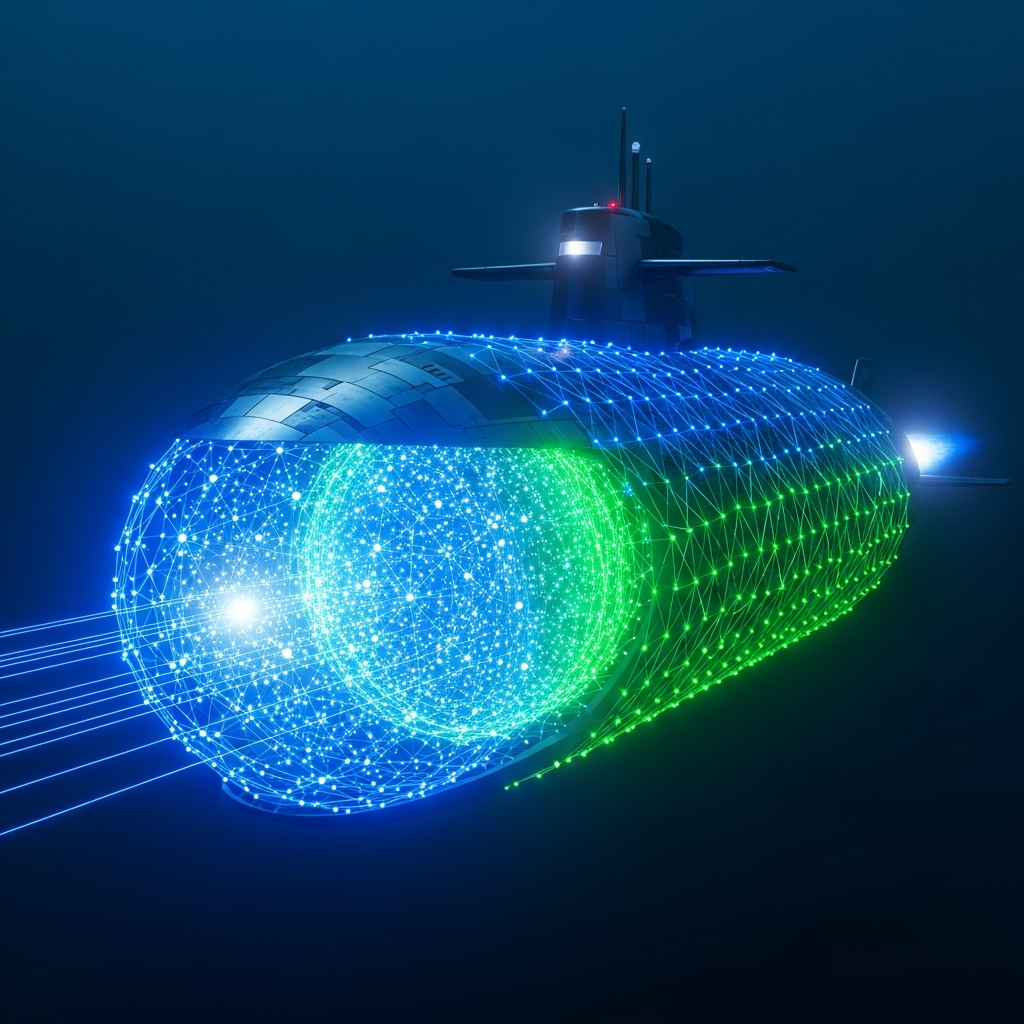
    Futuristic submarine navigating with quantum sensors
    Quantum sensors promise navigation where GPS fails\u2014deep underwater and in jammed environments.

    The GPS Addiction Problem

    Every time you summon an Uber, navigate a new city, or check the weather, you are relying on a fragile constellation of satellites orbiting 12,500 miles above your head. The Global Positioning System (GPS) is a marvel of engineering, but it has an Achilles heel: its signal is incredibly weak. By the time a GPS signal reaches your phone, it is weaker than the background noise of the universe. This makes it trivial to jam and surprisingly easy to spoof.

    For civilian life, a jammed GPS signal is an inconvenience. For military operations, autonomous vehicles, and critical infrastructure, it is a catastrophic single point of failure. Enter the quantum compass\u2014a navigation system that doesn\u2019t look up at the stars, but inward at the atoms themselves.

    The Drift Problem: Why We Can\u2019t Navigate Without Satellites

    Before we dive into quantum mechanics, we have to understand why we still need GPS despite having accelerometers in every smartphone. The principle of Inertial Navigation Systems (INS) is simple: if you know where you started, and you measure every acceleration and rotation, you can calculate your current position.

    Submarines and aircraft have used INS for decades. The problem is drift. Classical accelerometers and gyroscopes have tiny errors. Over time, these errors accumulate. A high-end aviation-grade INS might drift by a mile after an hour of flight without a GPS fix. Your phone\u2019s accelerometer would drift that far in minutes. To navigate without GPS for days or weeks\u2014essential for submarines or autonomous shipping\u2014we need sensors that are orders of magnitude more precise.

    Atom Interferometry: The Quantum Ruler

    The solution lies in atom interferometry. Just as light can behave like a wave, so can matter. When you cool atoms down to near absolute zero (using lasers, in a magneto-optical trap), they slow down enough that their quantum wave-like nature becomes dominant.

    Here is how a quantum accelerometer works:

    • Preparation: A cloud of atoms (usually Rubidium) is laser-cooled to micro-Kelvin temperatures.
    • Splitting: A laser pulse puts the atoms into a quantum superposition of two states. In one state, the atom received a momentum kick from the photon; in the other, it didn\u2019t. The atom is now effectively in two places at once, traveling along two different paths.
    • Reflection: A second laser pulse acts as a mirror, redirecting the two paths back toward each other.
    • Recombination: A final laser pulse recombines the paths.

    When the paths recombine, the matter waves interfere. If the device has accelerated during this process, the phase of the waves will shift relative to each other. By measuring the interference pattern at the end, we can measure the acceleration with exquisite precision\u2014far beyond what any mechanical or MEMS (Micro-Electro-Mechanical Systems) sensor can achieve.

    The Sagnac Effect and Quantum Gyroscopes

    While accelerometers measure changes in speed, gyroscopes measure rotation. Quantum gyroscopes rely on the Sagnac effect. When two waves travel in opposite directions around a loop, rotation of the loop shortens the path for one wave and lengthens it for the other. This creates a phase shift proportional to the rotation rate.

    Using cold atoms instead of light (as in ring laser gyroscopes) increases the sensitivity by a factor of roughly 0^{10}$ for the same enclosed area, simply because atoms have mass and light does not. This theoretical jump in sensitivity is the “holy grail” of navigation.

    From Lab Bench to Battleship

    The theory is solid. The challenge, as always with quantum tech, is SWaP: Size, Weight, and Power. A lab-based atom interferometer is typically a room full of optical tables, vacuum pumps, and racks of electronics. Putting that on a ship is hard; putting it on a drone is currently impossible.

    However, progress is rapid. In the UK, Imperial College London has successfully tested a standalone quantum accelerometer on a ship. In the US, companies like Infleqtion (formerly ColdQuanta) and Honeywell are racing to miniaturize the components. They are developing “chips” that can trap atoms and integrated photonics to replace the bulky laser tables.

    The “GPS-Free” Future

    A true quantum compass would allow a submarine to stay submerged for months without surfacing to correct its position. It would allow autonomous vehicles to navigate tunnels or urban canyons where GPS signals bounce and fade. Most importantly, it creates a resilient PNT (Position, Navigation, and Timing) system that cannot be jammed by an adversary unless they physically destroy the device.

    We are likely 5-10 years away from seeing these devices in commercial aircraft, and longer for consumer electronics. But the first generation of “quantum-assisted” inertial navigation is already being field-tested. The era of getting lost because you lost the signal is coming to an end\u2014replaced by the era of calculating your position by the behavior of frozen rubidium clouds.

  • The Hidden Pulse of the Earth: Quantum Gravity Gradiometry

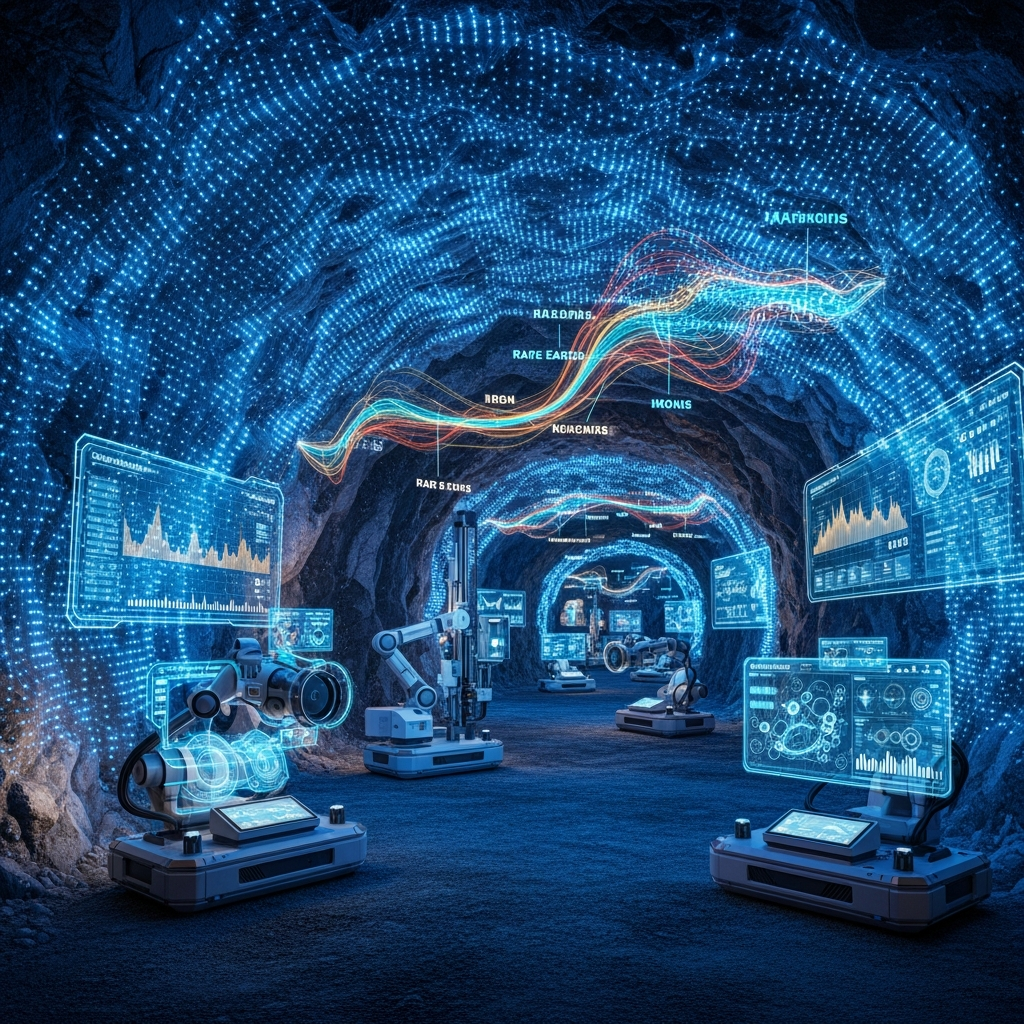
    Futuristic quantum sensors illuminating an underground mine

    The Hidden Pulse of the Earth

    Deep beneath the dusty red earth of the Australian Outback and the dense boreal forests of Canada, a silent revolution is underway. For centuries, humanity has scratched at the surface of our planet, relying on geological intuition and brute-force drilling to find the resources that power our civilization. It is a game of chance, expensive and invasive. But what if we could see through the rock as clearly as we see through glass? Enter Quantum Gravity Gradiometry (QGG), a technology that promises to make the ground beneath our feet transparent.

    Traditional mineral exploration is a blunt instrument. Geologists look for magnetic anomalies or seismic echoes, but these methods are often plagued by noise and ambiguity. To be certain, you have to drill. This means disturbing vast tracts of land, disrupting ecosystems, and spending millions on boreholes that frequently come up dry. The industry calls it “cover”—the layers of soil and rock that hide ore bodies. Quantum sensors are about to blow that cover wide open.

    How Cold Atoms Map Gravity

    At the heart of this technology lies a state of matter known as a Bose-Einstein Condensate (BEC). By cooling rubidium atoms to near absolute zero using lasers, scientists can force them to overlap and behave as a single quantum wave. This isn’t science fiction; it’s the same principle used in the world’s most precise atomic clocks.

    In a quantum gravity gradiometer, this atom cloud is split into two paths at different heights using a technique called atom interferometry. Because gravity varies slightly with distance from the Earth’s center—the gradient—the two paths experience a minutely different gravitational pull. When the waves are recombined, they create an interference pattern that reveals the gravity gradient with exquisite precision.

    Crucially, these sensors measure the difference in gravity between two points rather than absolute gravity. This differential measurement cancels out external noise—the rumble of a passing truck, the swaying of the device in the wind, or even the tidal pull of the moon. What remains is a pure signal of density anomalies underground. A dense ore body pulls harder; a hollow tunnel or aquifer pulls less.

    From Lab Bench to Muddy Boots

    The transition from delicate university experiments to rugged field tools has been rapid. Startups and research institutes are already deploying these sensors in real-world conditions. In the UK, the Quantum Technology Hub has demonstrated sensors capable of detecting underground tunnels and pipes—a potential lifesaver for civil engineers in sinkhole-prone areas.

    But the biggest prize is in mining. The transition to renewable energy requires a massive influx of copper, lithium, cobalt, and rare earth elements. Finding these deposits is getting harder as the easy, surface-level veins are exhausted. We need to look deeper. QGG allows geologists to map density variations hundreds of meters underground without drilling a single hole. It’s like having an MRI for the Earth.

    The Environmental Dividend

    This precision isn’t just about profit; it’s about sustainability. “Blind” drilling is environmentally destructive. By pinpointing resources with high accuracy, mining companies can reduce their exploration footprint significantly. We can identify the needle without burning the haystack.

    Furthermore, the technology has applications beyond extraction. It can monitor magma chambers in volcanoes, track groundwater depletion in aquifers, and even help archaeologists discover buried structures without excavation. It is a new way of seeing, a new sense for a species that has always been limited to the surface.

    As these sensors shrink from room-sized contraptions to devices that can fit on a drone or in a backpack, we are entering an era of “quantum civil engineering.” The invisible world beneath us is coming into focus, and with it, a smarter, less invasive way to interact with our planet.

  • Quantum Gravity Gradiometers: Mapping the Invisible Underground

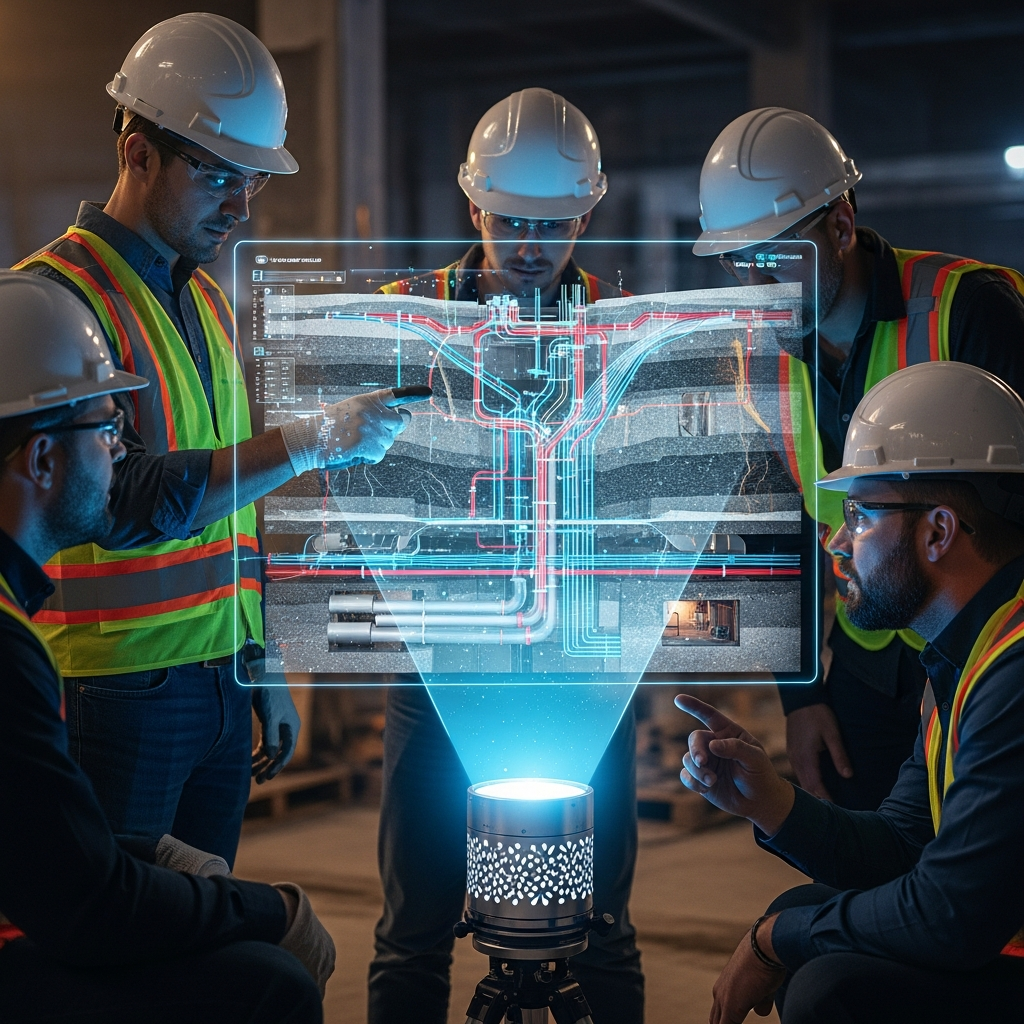
    Quantum sensor visualizing underground infrastructure
    Artist’s concept of a quantum gravity gradiometer visualizing subterranean structures.

    Beneath our feet lies a tangled, chaotic web of history and modern necessity: centuries-old sewers, high-voltage cables, fiber optic lines, and forgotten tunnels. For construction crews and civil engineers, this invisible layer is a constant hazard. A single misjudged excavation can sever critical infrastructure, leading to blackouts, flooding, or worse. While ground-penetrating radar (GPR) has long been the standard tool for mapping the subsurface, it has limitations, struggling with depth, soil composition, and resolution.

    Enter the quantum gravity gradiometer. Once the domain of theoretical physics and laboratory experiments, these ultra-sensitive devices are moving into the field, promising to revolutionize how we see the world beneath us. By detecting minute variations in the Earth’s gravitational field, they offer a way to map underground voids and density changes with unprecedented precision, bypassing the limitations of electromagnetic sensing.

    The Principle of Quantum Sensing

    At the heart of this technology is the principle of atom interferometry. Traditional gravity meters (gravimeters) use springs or falling masses to measure gravitational acceleration, but they are prone to drift and environmental noise. Quantum sensors, however, exploit the wave-particle duality of atoms.

    In a typical setup, a cloud of atoms—often rubidium—is cooled to near absolute zero using lasers, forming a Bose-Einstein Condensate. At these temperatures, the atoms behave less like billiard balls and more like waves. A series of laser pulses then acts as a beam splitter and mirror for these matter waves, separating the atomic wave function into two paths that travel at different heights. Because gravity varies slightly with height (the gradient), the two paths experience a different phase shift. When the paths are recombined, the interference pattern reveals the precise gravitational acceleration.

    A gravity gradiometer takes this a step further by using two clouds of atoms separated by a vertical distance. By measuring the difference in gravity between the two clouds simultaneously, the device cancels out common-mode noise—like the vibrations from a passing truck or microseismic activity—leaving only the signal from the local mass distribution. This differential measurement is crucial for operating in noisy, real-world environments.

    From Lab Bench to Construction Site

    The transition from optical tables to portable devices has been the primary engineering challenge of the last decade. Early systems were room-sized behemoths requiring vacuum pumps and complex laser alignments. Recent advancements in micro-electro-mechanical systems (MEMS) and photonic integration have allowed for significant miniaturization.

    Companies like Teledyne e2v and startups like Muquans (now part of iXblue) have demonstrated field-deployable units. In a landmark 2022 trial in Birmingham, UK, researchers successfully used a quantum gravity gradiometer to detect a hidden underground tunnel with a signal-to-noise ratio that far exceeded classical sensors. The device mapped the tunnel’s location and dimensions without any physical contact with the ground.

    The implications for civil engineering are profound. Were moving from dig and hope to scan and plan,” says Dr. Elena Rostova, a geophysicist specializing in urban sensing. “With quantum gradiometry, we can detect density anomalies that GPR misses entirely, like plastic pipes in clay soil or voids that havent yet caused a surface collapse.

    Mapping the Unmappable

    One of the most immediate applications is in mapping unmappable utilities. Plastic and ceramic pipes, which do not reflect radar waves well, are invisible to GPR in many soil conditions. However, a pipe—whether full of water or air—creates a density contrast with the surrounding soil. A sufficiently sensitive gravity gradiometer can detect this mass deficit.

    The sensitivity required is on the order of Eötvös units (1 E = 10^-9 s^-2). Current field-deployable quantum sensors are reaching sensitivities that can detect a 2-meter diameter tunnel at a depth of a few meters. As sensitivity improves, smaller features will become resolvable.

    Beyond utilities, the technology has applications in archaeology (discovering buried structures without excavation), mining (locating ore bodies), and even groundwater monitoring (tracking aquifer depletion in real-time). The ability to see density directly provides a fundamental ground truth that other sensing modalities lack.

    The Road Ahead: Cost and Complexity

    Despite the promise, barriers to widespread adoption remain. The first is cost. These devices currently rely on expensive laser systems and vacuum components, pricing them out of routine surveys. However, as with all quantum technologies, costs are expected to drop as manufacturing scales and component technologies mature.

    The second challenge is measurement speed. Atom interferometry is inherently a pulsed measurement, and building up a high-resolution map requires taking measurements at many grid points, each taking several seconds to minutes to average out noise. To be commercially viable for large-scale surveys, the data acquisition rate needs to increase, or the systems need to be mounted on moving platforms—a gravity scanner rather than a point-and-shoot device.

    Researchers are tackling this by developing hybrid sensors that combine the long-term stability of quantum sensors with the high bandwidth of classical accelerometers. This fusion allows for continuous, high-speed measurements that are periodically corrected by the quantum reference, offering the best of both worlds.

    As we continue to overcrowd our subsurface with infrastructure, the need for accurate 3D maps becomes critical. Quantum gravity gradiometers, once a scientific curiosity, are poised to become the eyes that guide our shovels, ensuring that the next time we dig, we know exactly what lies beneath.