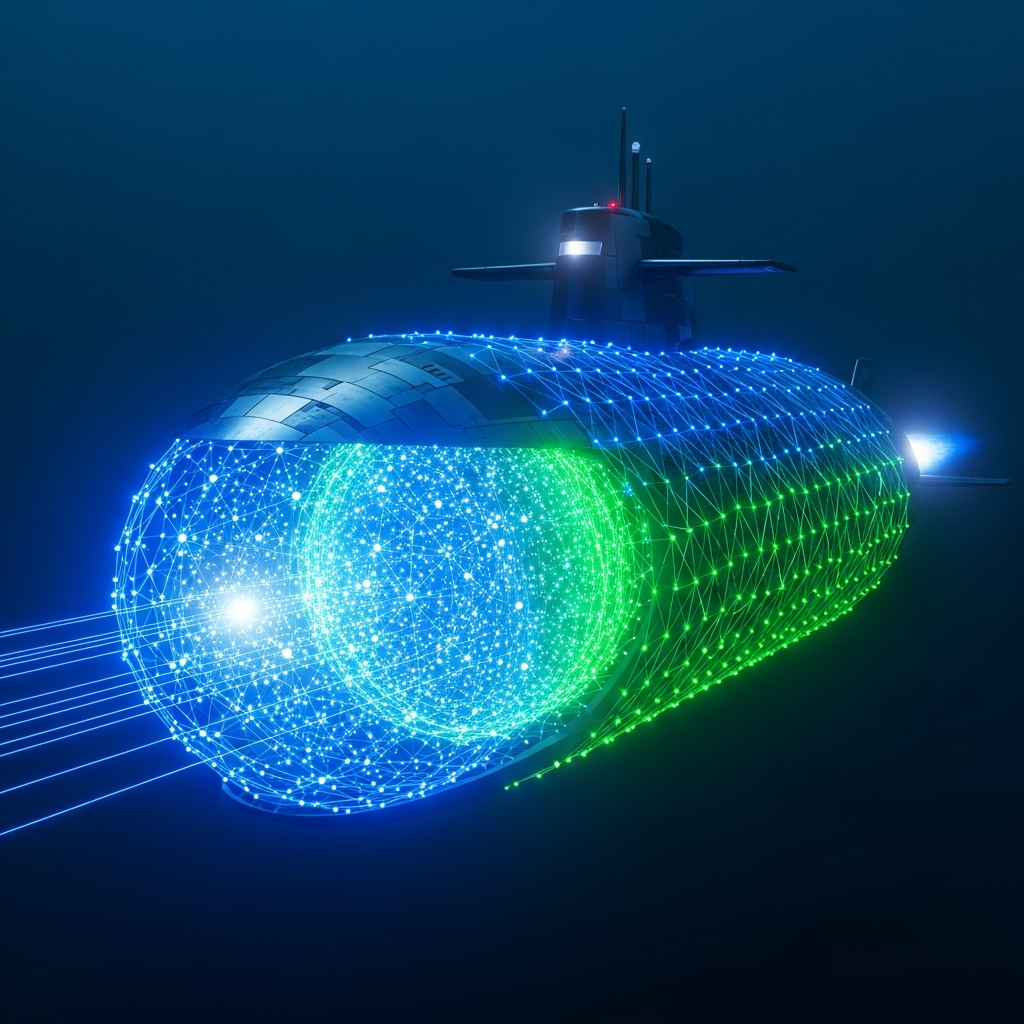
The GPS Addiction Problem
Every time you summon an Uber, navigate a new city, or check the weather, you are relying on a fragile constellation of satellites orbiting 12,500 miles above your head. The Global Positioning System (GPS) is a marvel of engineering, but it has an Achilles heel: its signal is incredibly weak. By the time a GPS signal reaches your phone, it is weaker than the background noise of the universe. This makes it trivial to jam and surprisingly easy to spoof.
For civilian life, a jammed GPS signal is an inconvenience. For military operations, autonomous vehicles, and critical infrastructure, it is a catastrophic single point of failure. Enter the quantum compass\u2014a navigation system that doesn\u2019t look up at the stars, but inward at the atoms themselves.
The Drift Problem: Why We Can\u2019t Navigate Without Satellites
Before we dive into quantum mechanics, we have to understand why we still need GPS despite having accelerometers in every smartphone. The principle of Inertial Navigation Systems (INS) is simple: if you know where you started, and you measure every acceleration and rotation, you can calculate your current position.
Submarines and aircraft have used INS for decades. The problem is drift. Classical accelerometers and gyroscopes have tiny errors. Over time, these errors accumulate. A high-end aviation-grade INS might drift by a mile after an hour of flight without a GPS fix. Your phone\u2019s accelerometer would drift that far in minutes. To navigate without GPS for days or weeks\u2014essential for submarines or autonomous shipping\u2014we need sensors that are orders of magnitude more precise.
Atom Interferometry: The Quantum Ruler
The solution lies in atom interferometry. Just as light can behave like a wave, so can matter. When you cool atoms down to near absolute zero (using lasers, in a magneto-optical trap), they slow down enough that their quantum wave-like nature becomes dominant.
Here is how a quantum accelerometer works:
- Preparation: A cloud of atoms (usually Rubidium) is laser-cooled to micro-Kelvin temperatures.
- Splitting: A laser pulse puts the atoms into a quantum superposition of two states. In one state, the atom received a momentum kick from the photon; in the other, it didn\u2019t. The atom is now effectively in two places at once, traveling along two different paths.
- Reflection: A second laser pulse acts as a mirror, redirecting the two paths back toward each other.
- Recombination: A final laser pulse recombines the paths.
When the paths recombine, the matter waves interfere. If the device has accelerated during this process, the phase of the waves will shift relative to each other. By measuring the interference pattern at the end, we can measure the acceleration with exquisite precision\u2014far beyond what any mechanical or MEMS (Micro-Electro-Mechanical Systems) sensor can achieve.
The Sagnac Effect and Quantum Gyroscopes
While accelerometers measure changes in speed, gyroscopes measure rotation. Quantum gyroscopes rely on the Sagnac effect. When two waves travel in opposite directions around a loop, rotation of the loop shortens the path for one wave and lengthens it for the other. This creates a phase shift proportional to the rotation rate.
Using cold atoms instead of light (as in ring laser gyroscopes) increases the sensitivity by a factor of roughly 0^{10}$ for the same enclosed area, simply because atoms have mass and light does not. This theoretical jump in sensitivity is the “holy grail” of navigation.
From Lab Bench to Battleship
The theory is solid. The challenge, as always with quantum tech, is SWaP: Size, Weight, and Power. A lab-based atom interferometer is typically a room full of optical tables, vacuum pumps, and racks of electronics. Putting that on a ship is hard; putting it on a drone is currently impossible.
However, progress is rapid. In the UK, Imperial College London has successfully tested a standalone quantum accelerometer on a ship. In the US, companies like Infleqtion (formerly ColdQuanta) and Honeywell are racing to miniaturize the components. They are developing “chips” that can trap atoms and integrated photonics to replace the bulky laser tables.
The “GPS-Free” Future
A true quantum compass would allow a submarine to stay submerged for months without surfacing to correct its position. It would allow autonomous vehicles to navigate tunnels or urban canyons where GPS signals bounce and fade. Most importantly, it creates a resilient PNT (Position, Navigation, and Timing) system that cannot be jammed by an adversary unless they physically destroy the device.
We are likely 5-10 years away from seeing these devices in commercial aircraft, and longer for consumer electronics. But the first generation of “quantum-assisted” inertial navigation is already being field-tested. The era of getting lost because you lost the signal is coming to an end\u2014replaced by the era of calculating your position by the behavior of frozen rubidium clouds.
Leave a Reply