Imagine charging your Tesla in 3 seconds. Not 30 minutes. Three seconds. Imagine a phone battery that lasts a month. This sounds like vaporware, but according to the laws of quantum mechanics, it is theoretically possible.
The bottleneck of the electric vehicle revolution isn’t the motor or the software; it’s the chemistry. Lithium-ion batteries are heavy, slow to charge, and prone to catching fire. We are hitting the limits of what classical chemistry can achieve.
The Simulation Game
The problem is that we can’t see what’s happening inside a battery at the atomic level. Simulating the interaction of ions moving through an electrolyte is too complex for even the biggest supercomputer.
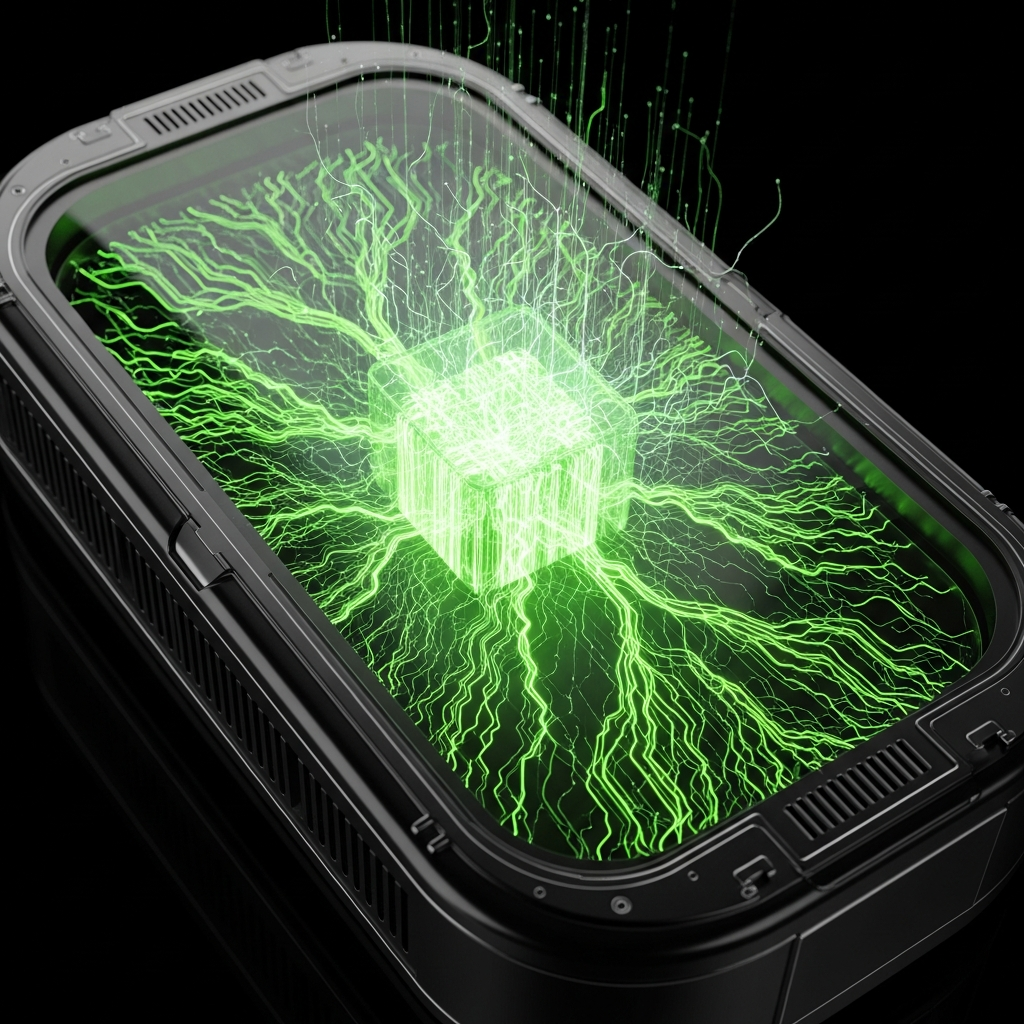
This is the “Killer App” for quantum computers. Companies like Mercedes-Benz and IBM are already partnering to model new materials for solid-state batteries. By simulating the quantum states of molecules, they can discover new electrolytes that offer 10x energy density without ever mixing a chemical in a lab.
Superabsorption: Breaking the Rules
But it gets weirder. Researchers are exploring a quantum phenomenon called Superabsorption. In a classical battery, the more cells you have, the longer it takes to charge. In a quantum battery utilizing entanglement, the opposite happens: the charging speed increases with the size of the battery.
This means a massive grid-scale battery could absorb energy almost instantly. We are years away from a prototype, but the physics suggests that our current charging speeds are just a temporary limitation of our primitive understanding of the universe.
Leave a Reply