In a deterministic universe, randomness is an illusion. If you knew the position and velocity of every particle in the cosmos at the moment of the Big Bang, and you had infinite computational power, you could theoretically calculate the exact moment you would read this sentence. This was the view of Pierre-Simon Laplace, and for centuries, classical physics agreed.
Computers, the ultimate engines of determinism, cannot generate true randomness. When a standard server generates a cryptographic key, it uses a Pseudo-Random Number Generator (PRNG). It takes a “seed”—perhaps the current time in milliseconds—and runs it through a chaotic algorithm. The result looks random to a human, but to a sufficiently motivated adversary who knows the seed, it is as predictable as a sunrise.
The Collapse of Determinism
Quantum mechanics shattered this comfortable clockwork reality. When a photon hits a beam splitter, it has a 50% probability of passing through and a 50% probability of reflecting. Until it is measured, it does both. When it is measured, the outcome is not determined by any hidden variable or previous state. It is intrinsic, fundamental randomness. It is the only thing in the universe that cannot be predicted, even in principle.
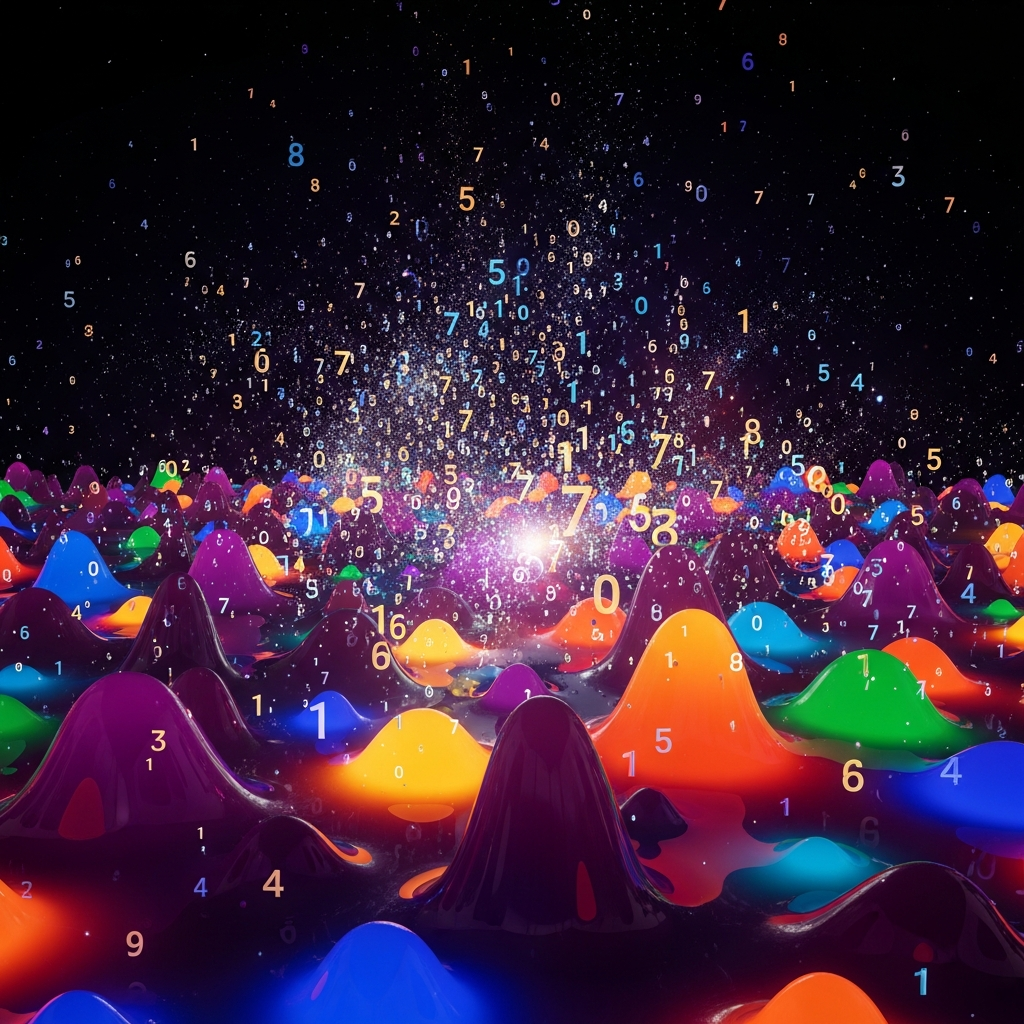
This property has moved from philosophical debates to silicon chips. Quantum Random Number Generators (QRNG) harness the collapse of the wave function to generate entropy. Unlike the “Lava Lamps” used by Cloudflare—which are a clever but classical macroscopic solution—QRNG chips measure the quantum noise of light (vacuum fluctuations) or the path of single photons.
Securing the Post-Quantum World
The implications for cryptography are profound. A cryptographic key is only as strong as its randomness. If a hacker can predict the random number generator, the encryption is worthless.
Companies like ID Quantique have successfully miniaturized this technology. The Samsung Galaxy Quantum smartphone series already contains a QRNG chip measuring 2.5mm square. It ensures that the encryption keys generated for banking apps are derived from the fundamental uncertainty of nature itself. Einstein famously objected to quantum mechanics by saying, “God does not play dice.” The existence of the QRNG industry suggests that not only does He play dice, but He is the only one who can roll them fairly.
Leave a Reply